Free tool · Email and text

Your quote follow-up,
ready to send.

Pick your trade, the situation and when you sent the quote. You get an email and a text ready to send, and the next follow-ups to plan, from day 2 to day 21.

  • Free, no sign-up
  • Email, text and follow-up schedule
  • Nothing made up: gaps are flagged in [brackets]
Your quote
What’s the situation?
When did you send the quote?
Personal touch optional
Add a detail (a hesitation, a constraint, what they liked) and the email and text are rewritten around it. 0 / 600

Nothing is saved. If you add details, they’re sent to our AI provider to write the messages, then discarded.

Your messages will appear here.

Fill in the form: you’ll get an email and a text to send now, and the next follow-ups to plan.

The guide

How to follow up on a quote without chasing

Why quotes go unanswered, when to follow up, what to write in each situation, and a template to copy.

On this page
  1. Why a quote goes unanswered
  2. When to follow up: day 2, day 7, day 21
  3. What to write, situation by situation
  4. Email, text or call?
  5. A follow-up template to copy
  6. Mistakes that cost you the project

1. Why a quote goes unanswered

Silence isn’t a no. Behind most unanswered quotes, there’s one of these:

  • They’re comparing. They’re waiting for the other quotes before answering anyone.
  • They have a question. A line isn’t clear, but it feels too small to call about.
  • They’re waiting on something. A loan, a rebate, a partner’s opinion, another job finishing.
  • They forgot. Your email slid under fifty others.

None of these sorts itself out while you wait. Each one is solved by a follow-up that brings the right answer.

2. When to follow up: day 2, day 7, day 21

Every follow-up needs a reason. Here’s a rhythm that works for most quotes:

  • Day 2: check it arrived. A short text: did the quote reach them, does it open? Easy to send, easy to answer.
  • Day 7: clear up a doubt. A call, backed up by a text if they don’t pick up. This is often where the project gets unstuck.
  • Day 21: ask where things stand. A short message that makes it easy to say “still on”, “postponed” or “gone elsewhere”.

If the client gave you a date (“after the holidays”), that date beats any schedule: write it down, and get back to them a month before.

3. What to write, situation by situation

The situation changes what the client needs from you:

  • No reply: talk about the quote, not about their silence. Check it arrived, then offer to explain a line.
  • “I’ll think about it”: send the recap the person who missed the appointment needs, then ask which point is holding them back.
  • Project postponed: agree on a period, keep in touch lightly, and get back to them before they start looking again.
  • “It’s too expensive”: show what’s included and compare like for like, then offer an option rather than a discount.

4. Email, text or call?

Each channel has a job:

  • Text for short messages: checking the quote arrived, offering a slot. It gets read the same day.
  • Call for conversation: a doubt, a hesitation, a price objection.
  • Email for the record: a recap, an adjusted quote, closing the file.

A simple rule: call to talk, write to keep a record.

5. A follow-up template to copy

The four-part structure behind every message the generator writes. Replace the brackets, keep the order.

Blank template

Hi [First name],

[Context: which project, which quote, sent when.]

[Something useful: an answer, an option, an available slot.]

[One easy question: “Shall I hold the 14th for you?”]

[An easy way out: “If the project is on hold, just tell me when to get back to you.”]

[Your name] [Company]

6. Mistakes that cost you the project

Five habits that turn a follow-up into pressure, or into silence:

  • “Just checking in…” says nothing, except that this is another follow-up.
  • “Have you made a decision?” forces a choice they may not be ready to make.
  • “I haven’t heard back from you…” reads like a reproach.
  • Waiting for them to come back. Sometimes they do. More often, they sign with whoever followed up.
  • Dropping your price at the first objection. Show what’s included first, then adjust the scope.
Templates

Follow-up templates by trade and situation

Three follow-ups written for your trade and your situation, ready to copy.

Questions

Your questions about following up on a quote

How long should I wait before following up on a quote?

Two days for a first message checking the quote arrived. Then a week for a call to clear up a doubt, and three weeks for a last message asking where things stand. If the client gave you a date, follow that date instead.

How many times can I follow up on a quote?

Three follow-ups are usually enough, the last one politely asking whether to keep the file open. Beyond that, it starts to feel like chasing. A dormant quote can be revived once, a month or more later.

Should I follow up by email or by text?

Both, depending on the moment. A text gets read quickly and suits short messages. A call clears up a doubt. An email keeps a record: a recap, an adjusted quote, closing the file.

What do I say when a client says “I’ll think about it”?

Thank them, then make the decision easier: recap what the quote covers and what’s left to decide, and ask which point is holding them back. Avoid “Have you decided?”.

What if the client says the quote is too expensive?

Show what’s included before talking discounts, and compare like for like with the other quote. If the budget really is the limit, offer an option on the scope, the phasing or the materials rather than cutting your price.

Is the generator free? What happens to what I type?

Yes, it’s free and there’s no sign-up. Without details, your messages are put together in your browser and nothing is sent. If you add details about the client, they’re sent to an AI model to write the messages, then discarded: Vision keeps nothing.

Other free tools

All free tools →

Further reading

All articles →
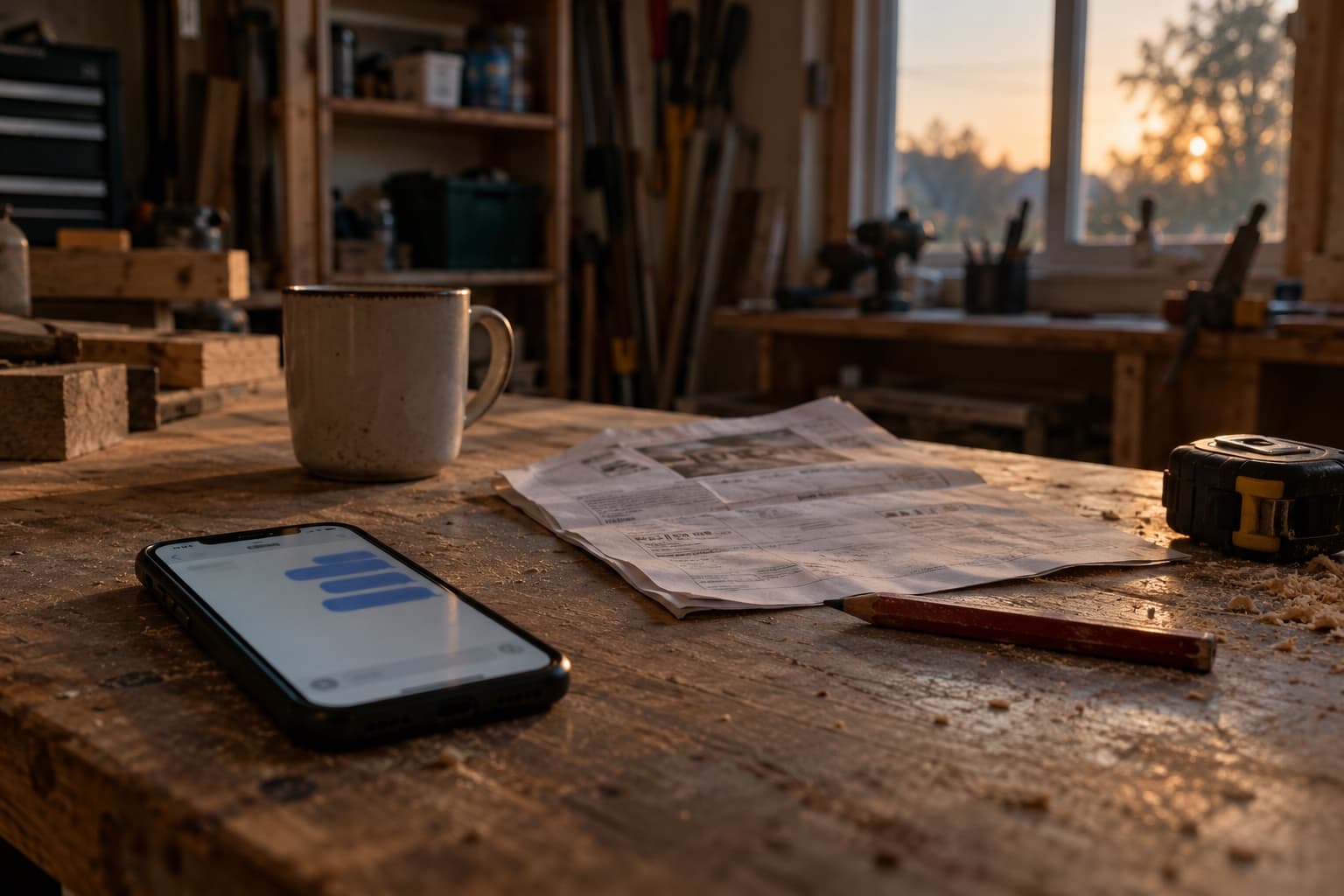
Phone on a workshop bench showing an unanswered message screen, next to a folded quote
Pending quotes

Client Not Responding After a Quote? What to Do Next

Your client went quiet after the quote? The 6 most common reasons, the right message for each one, and when to close the file.

8 min read
Your next signature might start here

Where do your customer inquiries get lost?

Three minutes to turn more inquiries into signed projects.

Get my free diagnostic ↗